


Pallet Buying vs Container Buying for Resellers
A profitable closeout deal can become an expensive mistake when the order size does not match your operation. Pallet buying vs container buying is not simply a question of getting a lower unit price. It is a decision about cash flow, warehouse capacity, freight exposure, sell-through speed, and how much inventory risk your business can carry.
For a discount retailer, importer, e-commerce seller, or regional distributor, the right answer depends on what happens after the stock lands. Can you inspect and sort it quickly? Do you have buyers ready for the volume? Can your warehouse receive a full load without slowing down the rest of your business? The best purchase is the one that protects margin from the first quote through the final sale.
Pallet Buying vs Container Buying: The Core Difference
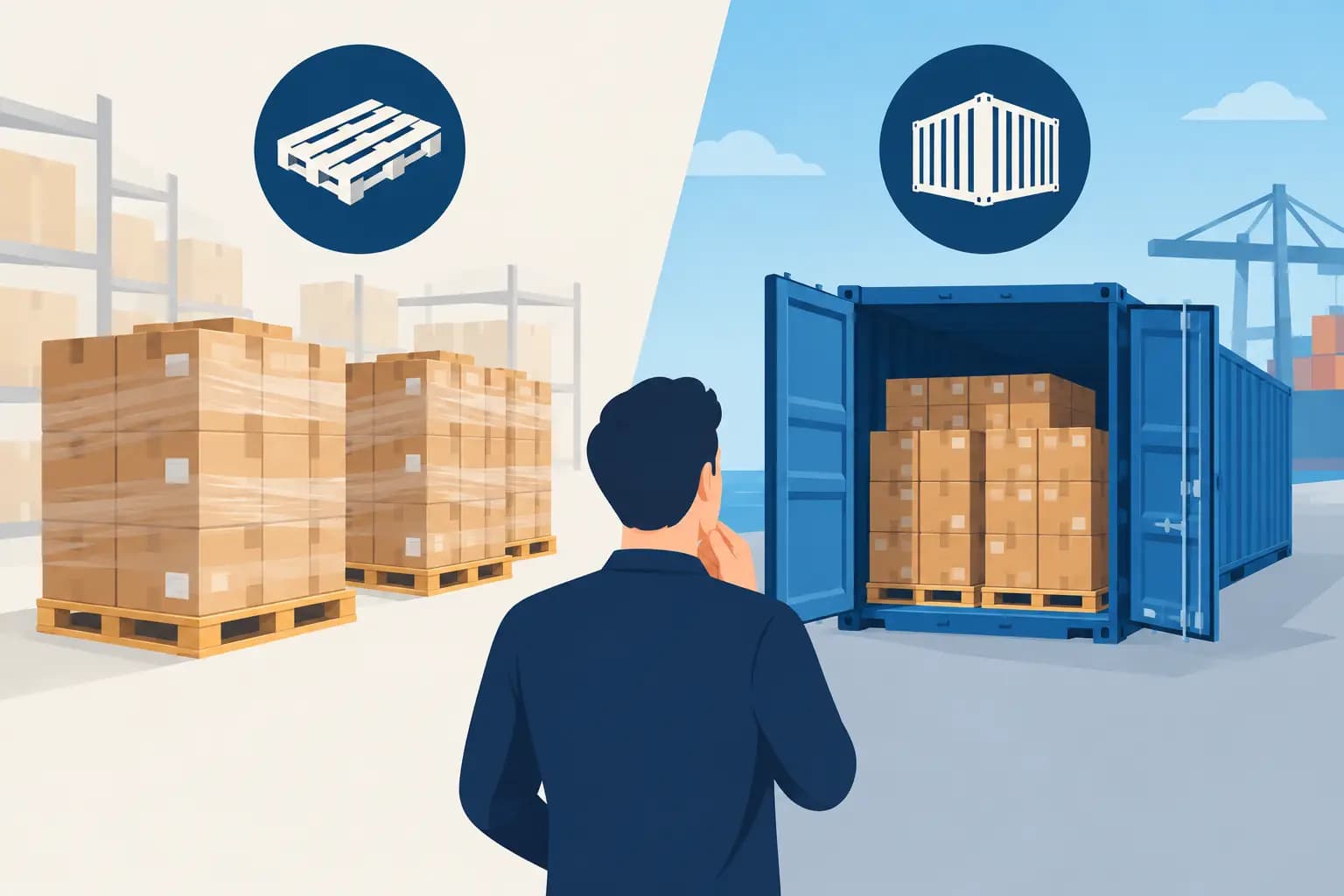
Pallet buying means purchasing a smaller, defined quantity of wholesale stock, usually one or several pallets. It gives buyers access to liquidation, surplus, overstock, and branded inventory without committing to a full truckload or shipping container. It is the practical entry point for testing a category, replenishing a proven seller, or filling a specific gap in your assortment.
Container buying involves purchasing enough goods to fill a 20-foot, 40-foot, or 40-foot high-cube container, depending on the product and packing configuration. This may mean a single SKU, a mixed load, or multiple palletized lots from one origin market. The upfront commitment is larger, but the cost per unit and freight cost per unit can be significantly better.
The important distinction is not just volume. A pallet order lets you buy flexibility. A container order lets you buy scale. Neither is automatically the better deal.
When Pallet Buying Makes Commercial Sense
Pallet buying is the smart move when information matters more than maximum volume. If you are entering a new category, trying a new brand, or buying from a new market, smaller orders let you measure real demand before placing a major commitment.
For example, a retailer may see an attractive deal on branded footwear. Buying two or three pallets provides enough depth to test sizes, colors, price points, and return behavior across stores or sales channels. If the inventory moves quickly, the next order can be larger. If it underperforms, the business has limited its exposure.
Pallet orders also make sense for buyers with tight storage. Full containers create immediate pressure: unloading, checking counts, sorting, labeling, shelving, and selling. A pallet shipment is easier to receive and can be routed directly to a store, fulfillment partner, or local distributor.
Cash flow is another major reason to buy by the pallet. A lower purchase value preserves working capital for freight, customs, advertising, staffing, and the next fast-moving deal. Many resellers lose margin not because they bought poor stock, but because too much money was tied up in slow inventory when a better opportunity appeared.
Pallet buying is especially effective when you need variety. A mixed order across household goods, toys, cookware, tools, apparel, or consumer electronics can create a broader retail offer without overloading your business with one category. For smaller chains and online sellers, variety can support repeat customer traffic and help identify the strongest product lines.
The trade-off is clear: pallets usually carry a higher unit cost and less efficient freight economics. If you repeatedly order small volumes of the same proven item, you may be paying for flexibility long after you need it.
Watch the freight minimums
Freight does not always fall proportionally with order size. A single pallet can carry handling fees, documentation charges, pickup costs, and delivery minimums that make the landed cost look much higher than the product price suggests. Always calculate the delivered cost per sellable unit, not just the price per pallet.
Ask for the pallet dimensions, gross weight, origin, unit count, and packing details before committing. A pallet with 500 pieces may look attractive until you find that the goods are bulky, low-value, or expensive to deliver to your market.
When Container Buying Creates a Better Margin
Container buying is designed for buyers who already know what they can sell. If your stores, dealer network, online marketplace operation, or wholesale customers can absorb volume consistently, containers can give you the pricing power that smaller buyers do not have.
The largest advantage is the landed cost. Ocean freight, port charges, customs clearance, inland transport, and handling are spread across many more units. When a container is packed efficiently, the difference in freight per unit can be substantial. That creates room for sharper retail pricing, stronger wholesale offers, or a healthier margin at the same selling price.
Containers also improve supply continuity. If a product category is a reliable seller and supply is irregular, securing a larger quantity can protect your operation from stockouts. This matters for chain stores, discount outlets, and distributors serving repeat accounts. A buyer who can promise quantity often wins business that a small-lot buyer cannot fulfill.
A full container may also give you more negotiating leverage. Suppliers and liquidation partners are often motivated to move complete lots quickly, particularly when warehouse space is needed or a seasonal changeover is underway. Buyers prepared to take volume can access more aggressive pricing and more favorable lot selection.
However, a lower unit cost is only valuable when the stock sells. A container of slow-moving goods is not a bargain. It is capital, storage expense, and operational work sitting in your warehouse.
The hidden cost of excess volume
Container buying requires discipline beyond the purchase price. Consider unloading labor, storage racking, insurance, customs paperwork, labeling requirements, local compliance, product sorting, and potential damages or shortages. Mixed liquidation loads may need significant processing before they are ready for retail or online sale.
Seasonality deserves special attention. A container of winter apparel purchased at an excellent price can become a costly hold if it arrives after the selling window. The same applies to toys after holiday demand, sportswear after a trend shifts, or electronics with short product cycles. Volume should follow demand, not optimism.
Compare Landed Cost, Not the Supplier Quote
The supplier quote is only the starting point. Whether you buy pallets or a container, your purchasing decision should be based on landed cost and expected recovery.
Start with the inventory price, then add freight, export handling, insurance, customs duties, brokerage, port or terminal charges, inland delivery, warehouse receiving, and any repacking or preparation work. Divide that total by the expected number of sellable units. If a mixed lot has damaged, incomplete, or less desirable pieces, use a realistic sell-through estimate rather than the total unit count.
A simple comparison can expose the right option. A pallet order may cost more per unit but reach your warehouse quickly and sell out in 30 days. A container may cost less per unit but take months to arrive, then another six months to clear. The pallet can generate a better annual return because the capital turns faster.
For this reason, purchasing managers should track gross margin and inventory turn together. High margin with slow turnover can weaken the business. Moderate margin with fast, repeatable turnover often provides more buying power over time.
A Practical Decision Framework
Before approving a large order, answer four commercial questions. First, is demand proven through your own sales data or committed wholesale customers? Second, can your warehouse and team receive the stock without creating bottlenecks? Third, do you have enough working capital to cover the full landed cost and wait for the inventory to sell? Finally, can you still make your required margin if a portion of the lot moves at a discount?
If one of those answers is no, a pallet purchase is usually the safer choice. It provides market intelligence at a manageable cost. If all four answers are yes and the product has reliable demand, container buying can turn purchasing scale into a real competitive advantage.
It also helps to think in stages. Start with pallets when evaluating a new supplier, product class, or country of origin. Move to larger pallet quantities once sell-through is established. Commit to container volume when the numbers show repeat demand, predictable logistics, and sufficient storage. This approach is less dramatic than chasing the biggest discount, but it protects the business while building volume with confidence.
Match the Deal to Your Selling Capacity
The strongest wholesale buyers do not ask only, “How cheap is this stock?” They ask, “How quickly can we convert this stock into cash?” That question changes every purchasing decision.
GLOBAL STOCKS works with buyers sourcing volume across categories and markets, where the right lot can range from a targeted pallet purchase to a full container program. Clear unit counts, product details, origin information, and shipping planning give buyers a better basis for deciding how much stock they can responsibly take.
Choose pallets when you need control, testing, variety, or faster capital rotation. Choose containers when demand is proven, logistics are prepared, and volume improves your landed cost enough to strengthen the resale offer. The next deal should fit your selling capacity, not just your warehouse space.